
To remove the glue from stickers the simplest method is to soften it with cooking oil or with the heat of a hairdryer, then remove it with a cloth. They work on the most stubborn residues denatured alcohol o acetone, but only on surfaces that tolerate them.
There is only one golden rule: first of all, test the product in a hidden corner. Each surface reacts in its own way, and a remedy that saves glass can ruin plastic or a painted wall.
Here you will find the methods that really work, divided by type of residue and surface, with precautions to avoid causing damage.
The method changes based on two things
Before you choose what to use, look at these two things. They save you time and mistakes.
How old is the glue. A fresh residue comes off easily, often without solvents. Old, hardened glue has “baked” in the air and needs to be softened first with heat or oil.
The surface it’s on. Glass and metal can handle almost anything. Plastic, paints and painted walls are delicate and require gentle methods. To make a mistake here means to discolor or scratch.
How to remove fresh glue residue
If you just peeled off the sticker and the glue is still soft, start with the gentler methods.
Another piece of tape. It seems like a paradox, but it’s the quickest trick. Press a piece of tape onto the residue, make it stick well and tear off with a sharp blow. The fresh glue transfers to the tape. Repeat until the surface is clean.
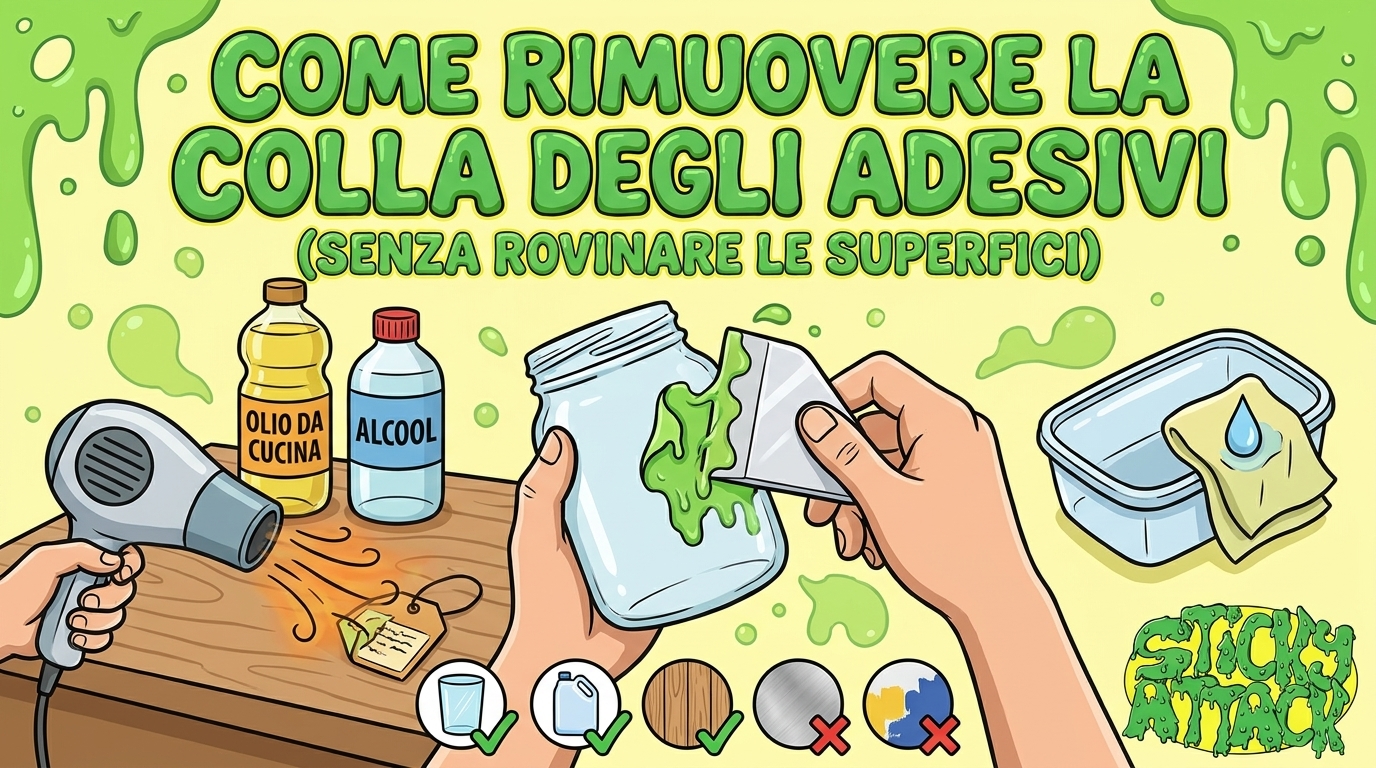
Cooking oil. Olive, seed or coconut oil: the fatty part dissolves the glue. Pour a few drops onto a cotton pad and rub with circular movements. Excellent on glass, metal, ceramic and hard plastic. Then clean the grease with soap and water.
Hot water and dish soap. Perfect for items you can submerge, like glass jars. Leave to soak for 10-15 minutes: the heat softens the glue and the residue comes off almost by itself.
How to remove stubborn glue residue
When the glue is old, hardened or industrial (for example from double-sided tape), more decisive methods are needed.
Heat. Point a blow dryer at the residue for a few seconds and scrape away with a plastic putty knife or an old credit card. The heat makes the glue soft again. Don’t use a heat gun on paint and plastic: it heats too much.
Denatured alcohol or acetone. They are the most effective on stubborn residues. Apply with a cotton ball, leave for a few seconds and rub. Be careful: they can discolor plastic, paint and shiny surfaces. Always test first.
Bicarbonate paste. Mix baking soda and a little water until you get a paste. Spread it on the residue, leave to act for a few minutes and brush away with a toothbrush. Gentle and useful when you want to avoid solvents.
Adhesive remover products. In hardware stores and supermarkets you can find specific gels and sprays, often based on citrus fruits. They are the right choice for the most resistant glues. Always follow the instructions on the package.
The right method for every surface
Not all surfaces behave the same way. Here’s what to use, and what to avoid.
| Surface | What to use | What to avoid |
|---|---|---|
| Glass and mirrors | Soak in hot water, oil, alcohol, acetone | Nothing special: the glass holds up well |
| Plastic and electronics | Oil applied delicately, adhesive remover gel | Strong acetone and alcohol: discolor and dull |
| Wood | Oil (if wood is treated/painted), light heat | Soaking in water, aggressive solvents on raw wood |
| Metal | Oil, alcohol, hot water | Metallic scrapers that scratch |
| Painted walls and surfaces | New buffered adhesive tape, cleaning milk | Alcohol, acetone and rubber: they also take away the color |
| Fabrics and clothes | Allow to dry, peel off by hand, then alcohol on a cloth | Washing with residue still attached, high temperatures |
| Car bodywork | Heat from the hairdryer + delicate oil, specific products | Pure acetone and blades: they ruin the paint |
A principle that applies everywhere: do not scrape with sharp blades or knives. Use your fingers, a plastic spatula, or a blunt scraper. The purpose is to remove the glue, not to etch the surface.
Precautions not to be skipped
A few quick rules that avoid permanent damage.
- Always test in a hidden spot. Apply the product with a cotton swab in an inconspicuous corner and wait 15-20 minutes. If it doesn’t change color or shape, proceed.
- Be careful of solvents on plastic. Acetone, white spirit and corrosive adhesive removers can dull or deform it.
- Work in a ventilated environment. Many solvents release vapors and are flammable: no flames or cigarettes near them.
- Always close with soap and water. After removing the glue, wash the surface to remove any traces of oil or solvent.
How to avoid residue next time
The best way to not fight with glue is to not leave it there.
When you peel off a sticker, heat it first with the hairdryer and pull slowly, at a low angle. The heat releases the glue and reduces residue. If you tear off in one go, however, the adhesive part remains attached.
There is also a choice upstream. Not all stickers are the same: there are a permanent glue, designed to last, and supports removable or statically sealed, designed to come off cleanly. If you already know that a sticker will have to be removed – a seasonal display, a timed promotion, a temporary label – the smartest thing is to choose it to be removable upon ordering.
When you order personalized stickers on StickyAttack you can evaluate the material and type of support based on use: whether they will remain forever or just for a period. Choosing well at the beginning saves you the work later.
Frequently asked questions
What is the fastest way to remove glue from stickers? On fresh residue, cooking oil or a piece of tape. On old ones, heat with a hairdryer and scrape with a plastic spatula.
How do I remove glue from plastic without ruining it? Use gently applied oil or a specific adhesive remover gel. Avoid strong acetone and alcohol: they can dull or discolor the plastic.
Is acetone good on all surfaces? No. It is effective on glass and metal, but can damage plastic, paint and shiny surfaces. Always test in a hidden corner first.
How do I remove glue from a dress? Let the glue dry, peel it off by hand or with a plastic spatula, then dab the residue with denatured alcohol on a cloth. Do not wash the garment while it is still sticky.
Can old, hardened glue be removed? Yes, but you need to soften it first with the heat of a hairdryer or with oil, then remove it little by little. It may take more than one step.